Shoah. Recordings from an Investigation
Claude Lanzmann’s film Shoah is a one-of-a-kind monument to the systematic murder of European Jews. In this lesson, students will explore audio recordings made in preparation for the film, recordings that were only recently released. They will listen to a survivor telling her story, compare it with the statements of convicted perpetrators, discuss what these recordings mean – and make their own audio recording. These multilingual recordings are part of the UNESCO Memory of the World program.
Beforehand, print out the analysis sheet for your students, which is available for download under “Help and Material.”
Sections90 minGrades 11–13
- The Cassette Tapes
- Shoah: Recordings from an investigation
- An Unheard Voice
- Voices of the perpetrators
- Double Witness
- Reflection


Learning Objectives
Discover
Discover oral history as a method.
Understand
Listen to audio recordings from eyewitnesses to the Shoah and understand them as unique historical sources.
Reflect
Think about the recordings and the witnesses’ statements, ask questions, and discuss them.
Apply
Listen to historical audio recordings, analyze them, and record your own.
Progress
What Is Your Role As a Teacher?
Even though students will be working on individual screens, an important part of learning happens together in the classroom. As the teacher, your role is to facilitate discussions, guide students as they share their results, and supervise them as they watch and listen to media together. Poll results are displayed anonymously, while text responses show students’ names. The “Tips for Teachers” sections offer guidance on teaching strategies. The icon indicates the type of activity students are engaged in.
Discussion
Students discuss and share personal experiences. This may evoke emotional responses.
The Cassette Tapes
What do you think?
Are you good at listening? Cast your vote!
A Box of Cassette Tapes
This brown cardboard box of cassettes has been part of the Jewish Museum Berlin’s collection since 2021. There are about 150 tapes in total. But what’s on them? When, where, and why were they recorded?
Look closely at the photo to find out more about the cassettes – and then answer the quiz questions.

A cardboard box of cassettes1
What was recorded on the cassettes?
When were the cassettes recorded?
One of 152 cassettes
This cassette was recorded in Germany.
Listen to the short excerpt to get a sense of what this kind of source sounds like.
Then draw a picture of how you imagine the place it was recorded. Or give the recording a title.
Interview with Richard Otto Horn, conducted by Irena Steinfeldt-Levy2
Shoah: Recordings from an investigation
Take a Closer Look!
What is the Shoah, and how did Lanzmann ask about it?
Watch the video now and find out.
In 1973, Claude Lanzmann was commissioned to make a film about the Shoah, or Holocaust. When he finally accepted – after much hesitation – he sensed how immense the project could grow.
Together with his colleagues Corinna Coulmas and Irena Steinfeldt-Levy, he searched archives in Israel, the United States, Germany, and other countries for names – of survivors and perpetrators alike. He knew that the film would not be possible without their voices.
Meanwhile, Lanzmann also began conducting preliminary interviews with eyewitnesses to convince them to appear on camera. Armed with background knowledge and guided by his intuition, Lanzmann questioned them about every aspect of the persecution and extermination of Europe’s Jews.
An Unheard Voice
Ilana Safran
One of the people Lanzmann could not convince to appear on camera was Ilana Safran. Born in Essen, Germany, Ursula Stern – who later took the Hebrew name Ilana Safran – was deported from the Netherlands to Sobibor. In October 1943, she managed to escape from the extermination camp. In the following recordings, a roughly fifty-year-old Safran is speaking with Claude Lanzmann at her home in Israel.
What are Lanzmann and Safran talking about – and what does it mean?
- Listen to the four audio recordings and read along with the transcript.
- Then listen again and fill out the analysis worksheet.
To move to the next recording, swipe the audio to the left.
What topics do they discuss? What topics do they not discuss?
Which topics do Lanzmann and Safran discuss in the recordings? What is left unspoken?
Take notes and come up with a heading for each audio clip!
Discussion
“You can be perfectly silent in front of the camera.” Claude Lanzmann wanted to portray Ilana Safran’s speechlessness in the film. Why?
Discuss in pairs or in a group.

Voices of the perpetrators
What do you think?
Claude Lanzmann and his team researched the addresses in Germany of former high-ranking Nazi officials responsible for carrying out mass murder – as well as bureaucrats, profiteers, and witnesses from the post-war trials. Lanzmann and his team often knocked on the perpetrators’ doors unannounced and tried to initiate a conversation. They left their recording devices hidden in a bag. In many cases, these conversations didn’t make it past the front door.
Do you think it is important that Lanzmann also spoke with perpetrators? Cast your vote!
Perpetrators
These four men were all perpetrators, guilty of heinous crimes. What else do they have in common?
First, read the background info about the four perpetrators:
- Richard Otto Horn (1903–1999): SS-Unterscharfführer at the Treblinka death camp. Acquitted in the Treblinka Trials in 1965.
- Edmund Veesenmayer (1904–1977): SS-Brigadeführer and diplomat, partly responsible for the deportation of Hungarian Jews to Auschwitz. Sentenced to twenty years in prison in 1949. Released in 1951 after only two years.
- Kurt Eisfeld (1904–?): Employee of I.G. Farben who selected the Buna-Monowitz site for Auschwitz III. Testified at the I.G. Farben Trials; he was never charged himself with any crimes.
- Karl Wolff (1900–1984): General of the General of the Waffen-SS, partly responsible for deporting Jews from the Warsaw Ghetto to Treblinka. Sentenced to four years in prison in 1949, and then in 1964, to fifteen years as an accessory to the murder of 300,000 Jews. Released early after five years.
Listen to the recordings twice and fill in the analysis sheet as you go.
To move to the next recording, swipe the audio left.
“That's settled for me!”
Lanzmann and his team did not reveal the reason for the interview right away, so the perpetrators would start talking. Once a conversation began, the perpetrators very quickly tried to dodge the uncomfortable questions.
What do the perpetrators have in common? Take notes!
What strategies did the perpetrators use to steer the conversations and avoid giving honest answers?
Double Witness
Double Witness
To convict Nazi perpetrators, victims had to testify in court. Ilana Safran was one of the witnesses who testified. In the recording, she talks about how she was asked to identify the perpetrators during the Sobibor trial in the mid-1960s.
Based on Ilana Safran’s answers, can you tell how she must have felt in the courtroom, face to face with the perpetrators? And how did she feel later, as an eyewitness to history, telling Claude Lanzmann about her experiences?
Listen to the recording and use the analysis worksheet.
Interview with Ilana Safran, conducted by Claude Lanzmann and Irena Steinfeldt-Levy5
Discussion
Based on Ilana Safran’s answers, can you tell how she must have felt in the courtroom, face to face with the perpetrators? And how did she feel later, as an eyewitness to history, telling Claude Lanzmann about her experiences?
Discuss in groups.
Reflection
Memory
The interviews, together with Lanzmann’s film Shoah, are part of the UNESCO Memory of the World program and are important historical testimonies. At the same time, they help societies today and in the future navigate difficult questions. Do you know someone who lived through a turning point in history? Or have you experienced one yourself?
Choose one question!
- In your opinion, what is a historical event that the world must never forget?
Record a conversation with someone who can tell you about this event.
- What line, word, or moment from the interview with Ilana Safran stuck in your mind – and why?
Write it down or make an audio recording of yourself talking about it.
- What do you think about Ilana Safran’s quote: “If the Germans want to live together with them [the perpetrators], so it‘s, uh, their problem. It's not mine.” What does she mean by that? Discuss this in a group or record yourself sharing your opinion.

Bonus: Irena and Corinna look back
In 2025, Corinna Coulmas and Irena Steinfeldt-Levy visited the Jewish Museum Berlin as special guests. What do they remember about working with Claude Lanzmann? And how did their encounters with the eyewitnesses shape the rest of their lives and careers?
Watch the video to find out!
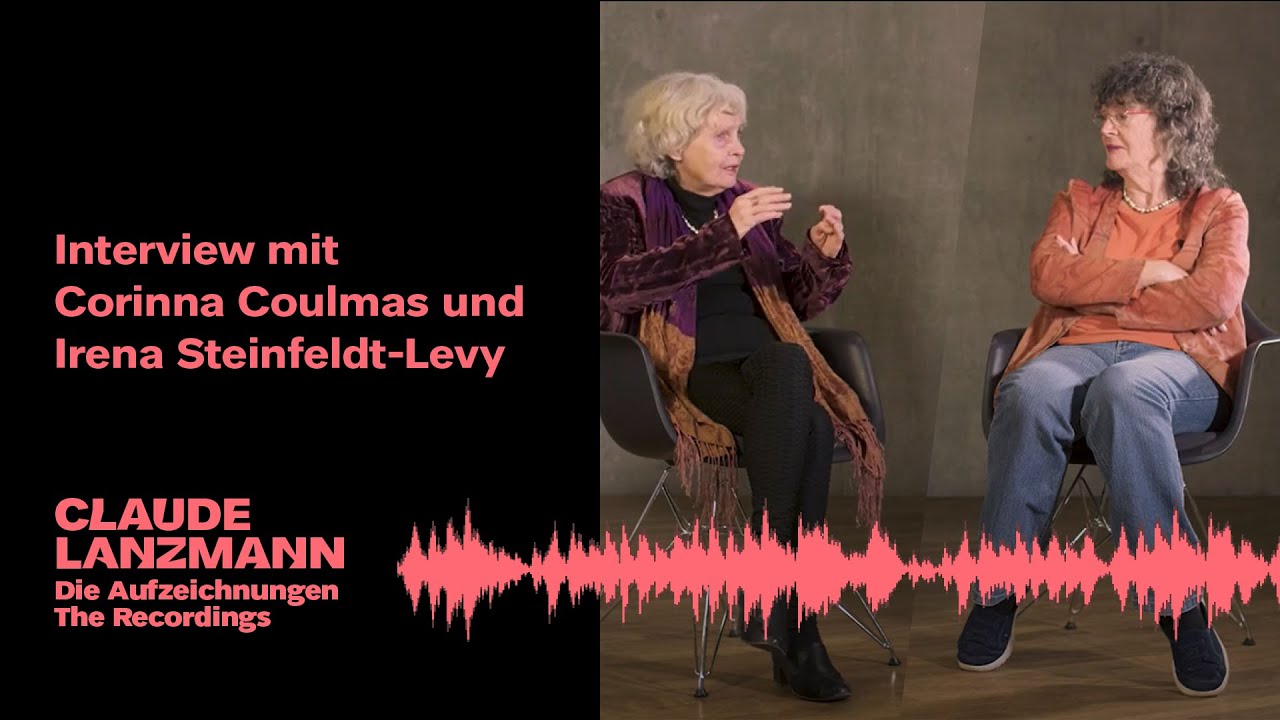
Interview with Corinna Coulmas and Irena Steinfeldt-Levy, Jewish Museum Berlin 2025 (22 min, in German with English subtitles)
Provide this module to students
Simply share the module with your class using the QR code or link provided.